

Blog / Thousand Oaks Toyota Dealer

Blog

All Thousand Oaks Toyota Dealer Thousand Oaks Toyota Service
New 2027 Toyota GR86

Tips for Buying a New Toyota

There are no secret handshakes in car buying. The people who get the best experience and the best deal are simply the ones who show up prepared. Here are nine things to do before and during your purchase. 1. Decide What You Need Before You Fall for a Trim Start with how you actually drive. How many people do you carry? How long is your commute? Do you tow or go off pavement? Answer those and the lineup narrows quickly: a Corolla or Camry for commuting, a RAV4 or Highlander for family duty, a Tacoma or Tundra for work and weekends. Our model research pages compare trims side by side. 2. Give the Hybrid a Serious Look With California gas prices, the hybrid version of the same model often pays back its price difference in fuel savings over a few years, and hybrids tend to hold their resale value. See what is available on our electrified vehicles page. 3. Get Pre-Approved First Knowing your rate and budget before you shop removes the biggest unknown. It takes a few minutes to get pre-approved online, and it lets you compare any outside offer from your bank or credit union against Toyota's financing. 4. Know What Your Trade-In Is Worth Do not guess. Get a real number with a Kelley Blue Book Instant Cash Offer before you visit. Bring both keys, your registration, and your loan payoff information if you still owe on it. 5. Check Current Offers and Rebates Toyota's financing rates, lease offers and cash incentives change regularly and vary by model. Look at our current manufacturer specials before you come in. Two rebates people often miss: College graduate rebate for recent and upcoming grads Military rebate for eligible service members and their families 6. Focus on the Out-the-Door Price A low monthly payment can hide a long loan term. The number that matters is the total out-the-door price: vehicle price plus tax, license and fees, minus your trade and any rebates. Ask for it in writing and compare that figure, not the payment. 7. Test Drive the Exact Trim You Plan to Buy Different trims of the same model can have different engines, wheels, seats and screens. Drive the one you intend to own, on roads you actually use. Take it on the 101 and up a hill. Schedule a test drive so the car is ready when you arrive. 8. Be Flexible on Color, Not on Must-Haves Popular Toyota models, especially hybrids, can be in short supply. If you are open to a second-choice color, you will usually get your car sooner. If the exact build you want is not on the lot, ask us about incoming vehicles that have not arrived yet. 9. Understand What Comes With the Car Every new Toyota comes with a factory warranty, including 3-year/36,000-mile basic coverage and 5-year/60,000-mile powertrain coverage, plus the ToyotaCare no cost maintenance plan and Toyota Safety Sense driver-assist features. Knowing what is already included helps you decide which optional protection products are worth it for you and which are not. Is There a Best Time to Buy? The end of a month and the model-year changeover can bring stronger offers, but the best time is when the vehicle you want is in stock and there is an incentive on it. Chasing a calendar date and missing the right car is a poor trade. Shop New Toyotas in Thousand Oaks You can do most of this from your couch. Shop our new inventory online, build your deal, and finish at the dealership or have us walk you through it by phone at 805-497-2791. Thousand Oaks Toyota is family owned and located at 2401 Thousand Oaks Blvd. Frequently Asked Questions What is the best month to buy a new Toyota? Offers are often stronger at month-end and when the next model year arrives, but availability matters more. The best time is when the vehicle you want is in stock with a current incentive. Should I get financing through the dealer or my bank? Compare both. Get pre-approved and bring any outside offer with you. Toyota often runs special financing rates on select models that banks cannot match. What should I bring when buying a new car? Your driver's license, proof of insurance, and for a trade-in: registration, all keys and loan payoff information. Is a Toyota hybrid worth the extra cost? For most California drivers, yes. Fuel savings and strong resale value typically offset the higher price within a few years, depending on how much you drive.
Toyota Certified Used Vehicles

Toyota Certified Used vs Used Cars

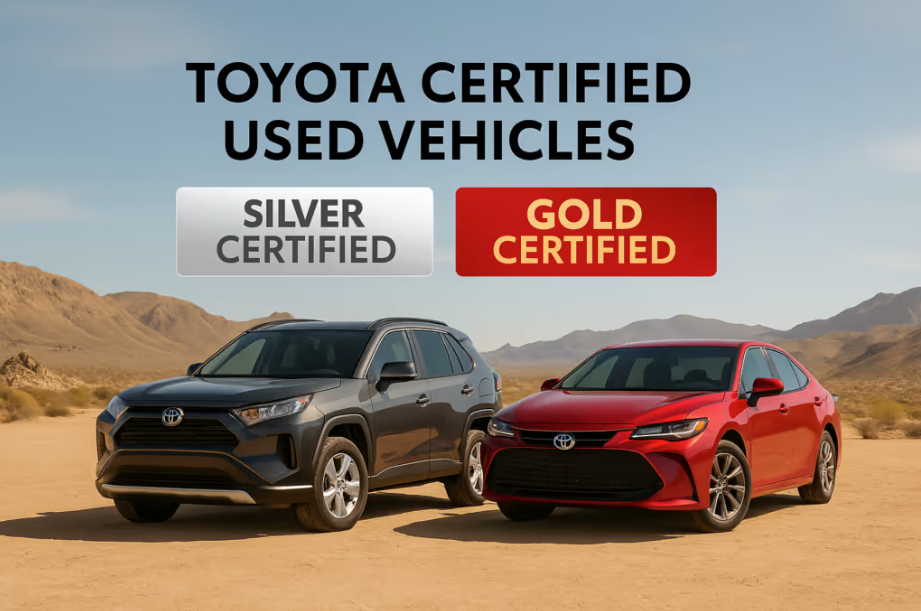
Two used Toyotas can look identical on the lot and be very different purchases. One is "certified," one is not, and there is usually a price gap between them. Here is what that badge actually gets you, and how to decide whether it is worth it. What "Toyota Certified" Means A Toyota Certified Used Vehicle (TCUV) is a used Toyota that meets Toyota's age and mileage limits, has a clean history report, passes a detailed inspection by Toyota-trained technicians, and is backed by a warranty from Toyota itself, not a third party. Only Toyota dealers can sell them. Toyota offers two levels: Gold and Silver. Gold Certified, Silver Certified and Used Compared Gold Certified Silver Certified Regular used Age and miles Up to 6 model years old, 85,000 miles or less Up to 10 model years old, 60,000 to 125,000 miles Any Inspection 160-point minimum 136-point minimum Varies by seller Comprehensive warranty 12 months / 12,000 miles Not included Only what remains from the factory, if any Powertrain warranty 7 years / 100,000 miles 12 months / 12,000 miles Only what remains from the factory, if any Roadside assistance Included Included No CARFAX history report Included Included Ask the seller New-car financing rates Available to qualified buyers No No Price Highest Middle Lowest Warranty terms have conditions on when coverage starts and ends. See our Toyota Certified program overview for full details. Why Certified Costs More You are paying for three things: the reconditioning work done to pass inspection, the warranty coverage, and the fact that only the better vehicles qualify in the first place. A car with a branded title or a spotty history never gets the badge. When Certified Is Worth It You plan to keep the vehicle for several years and want protection against a major repair You are financing and can qualify for new-car rates on a Gold Certified vehicle, which can offset part of the price difference You want a nearly new car without the new-car price You do not want to gamble on an unknown history When a Regular Used Car Makes More Sense You are working with a firm budget. See our vehicles under $15,000 You want an older model or a non-Toyota brand that cannot be certified You are comfortable setting money aside for repairs instead of paying for warranty coverage up front A regular used car from a dealer is still a safer buy than a private-party sale. You get a vehicle that has been inspected, a clear title, and someone to call if there is a problem. What to Check on Any Used Car The history report. Look for accidents, number of owners and consistent service records. Open recalls. Recall repairs are free at a Toyota dealer. Check any Toyota at toyota.com/recall. Tires and brakes. These tell you how the car was maintained and what you will spend in the first year. A real test drive. Drive it on the freeway and on surface streets, and test every button. What warranty remains. Ask for it in writing. Thinking About a Used Hybrid? Toyota hybrids are some of the best used buys on the road. Hybrid battery coverage from the factory runs longer than the basic warranty, and it stays with the car when it changes owners. Ask us how much hybrid coverage remains on any vehicle you are considering. Shop Used and Certified Toyotas in Thousand Oaks Browse our Toyota Certified inventory or all used vehicles, and get a number for your current car with a KBB Instant Cash Offer. Our sales team is available seven days a week at 805-497-2791. Frequently Asked Questions Is a Toyota Certified Used Vehicle worth the extra money? For most buyers who plan to keep the vehicle several years, yes. The inspection, Toyota-backed warranty and available new-car financing rates often justify the price difference. What is the difference between Toyota Gold Certified and Silver Certified? Gold Certified vehicles are newer with lower miles and carry longer warranty coverage, including a 12-month/12,000-mile comprehensive warranty and a 7-year/100,000-mile powertrain warranty. Silver Certified covers older, higher-mileage Toyotas with a 12-month/12,000-mile powertrain warranty. Can any dealer sell a Toyota Certified Used Vehicle? No. Only authorized Toyota dealers can certify and sell Toyota Certified Used Vehicles. Is the Toyota Certified warranty transferable? Yes, Toyota's certified warranty coverage can be transferred to a new owner, which helps resale value.

Lease or Buy a Toyota

Should I Lease or Buy a Toyota

Neither leasing nor buying is the "smart" choice for everyone. They are two different tools. The right one depends on how much you drive, how long you keep cars and what you want your monthly budget to look like. Five questions settle it for most people. Leasing vs. Buying at a Glance Leasing Buying Monthly payment Usually lower Usually higher Money up front Usually less Usually more Mileage Annual limit set in the contract Unlimited Ownership You return it, or can buy it at lease end Yours, with equity once it is paid off Repairs Typically under factory warranty the whole time Your cost after the warranty ends Customizing Must be returned to stock Do what you like Long-term cost You always have a payment Lowest if you keep the car for years The 5 Questions That Make the Decision Easy 1. How many miles do you drive a year? Leases come with an annual mileage allowance, commonly in the range of 10,000 to 15,000 miles, and you pay a per-mile charge if you go over. If you commute from Thousand Oaks to downtown LA every day, buying is almost certainly the better fit. If you work from home or close by, leasing works well. 2. How long do you keep your cars? If you like something new every two or three years, leasing is built for you. If you drive cars until the wheels fall off, buy. Toyotas are known for lasting a very long time, and the years after your loan is paid off are the cheapest miles you will ever drive. 3. What matters more: a lower payment now or no payment later? With a lease you pay only for the portion of the car's value you use, so the payment is lower. With a purchase you pay more each month, but the payments end and you own an asset. 4. Are you easy or hard on vehicles? Leased cars need to come back in good shape. Normal wear is expected, but damage beyond that is charged at turn-in. If your Tacoma hauls gravel and your dog lives in the back seat, buy it. 5. Do you want to modify it? Lift kits, aftermarket wheels and custom audio belong on a vehicle you own. The Quick Verdict Leasing probably fits if: you drive under about 12,000 miles a year, like having the newest safety and tech features, want a lower payment, and prefer to stay under warranty. Buying probably fits if: you drive a lot, keep cars five years or longer, want to build equity, or use your vehicle hard. Three Things People Get Wrong About Leasing "You have nothing at the end." You have options. You can return the car, buy it for the price set in your contract, or trade it in. Because Toyotas hold their value so well, a leased Toyota is sometimes worth more than its buyout price, and that difference is yours to use. "Leasing is always more expensive." It depends on your habits. If you would trade in a purchased car every three years anyway, leasing can cost about the same or less. "You are stuck for the whole term." There are ways out, including trading the vehicle in early. Ask us to run the numbers. A Note for California Drivers In California, sales tax on a lease is generally charged on each monthly payment rather than on the full vehicle price up front, which is one reason the cost to get started is lower. Let Us Run Both Numbers for You The easiest way to decide is to see a lease and a purchase side by side on the same vehicle. Our finance team will lay out both with no pressure. Start with our current lease and finance offers, get pre-approved, or contact our finance department at 805-497-2791 Frequently Asked Questions Is it better to lease or buy a Toyota? Lease if you drive fewer miles, want lower payments and like a new vehicle every few years. Buy if you drive a lot, keep cars for many years or want to own the vehicle outright. Can I buy my Toyota at the end of the lease? Yes. Your lease contract sets a purchase price, and you can buy the vehicle at lease end or return it. What happens if I go over my lease mileage? You pay a per-mile charge for the excess at turn-in. If you expect to drive more, choose a higher mileage allowance up front, which costs less than paying overage later. Does leasing require a down payment? Not always. Many leases can be structured with little money due at signing, though a larger amount up front lowers the monthly payment.